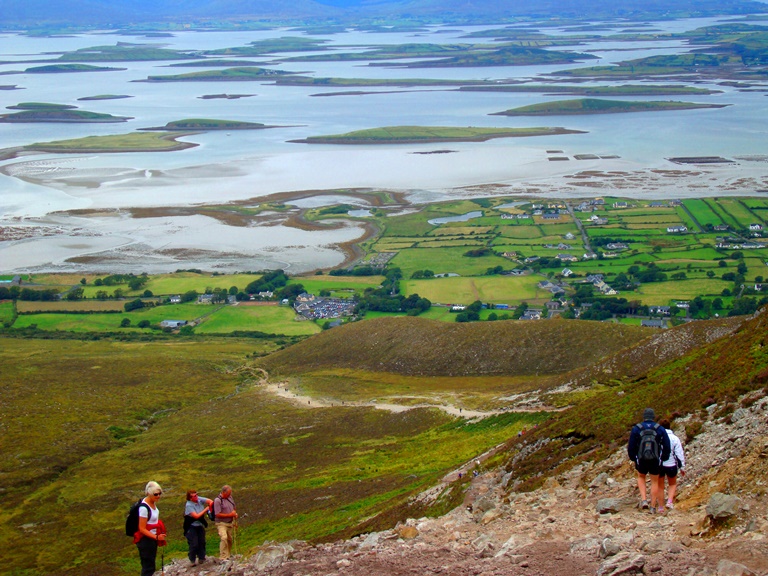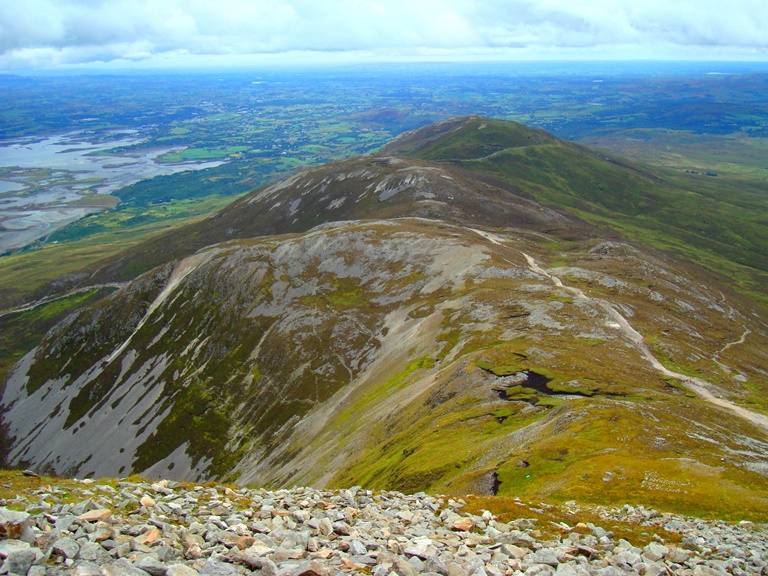

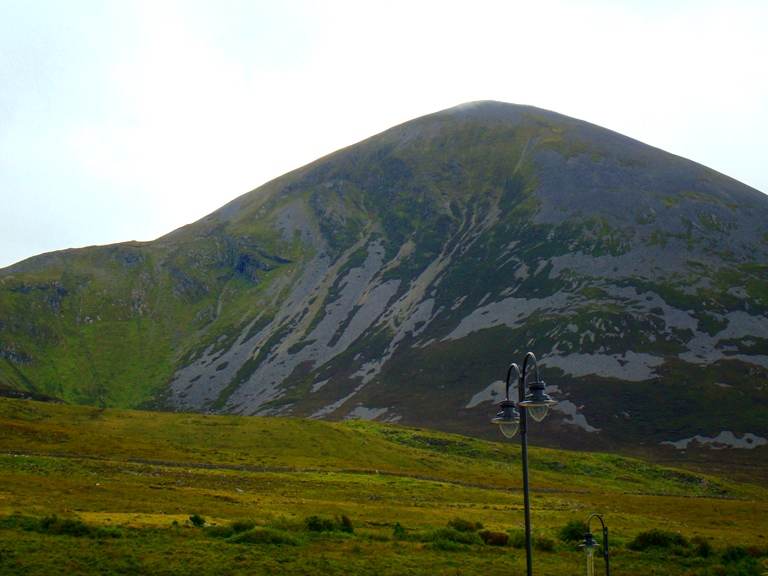
Just outside Westport, Co. Mayo, sits Croagh Patrick at 765m (2,507ft).
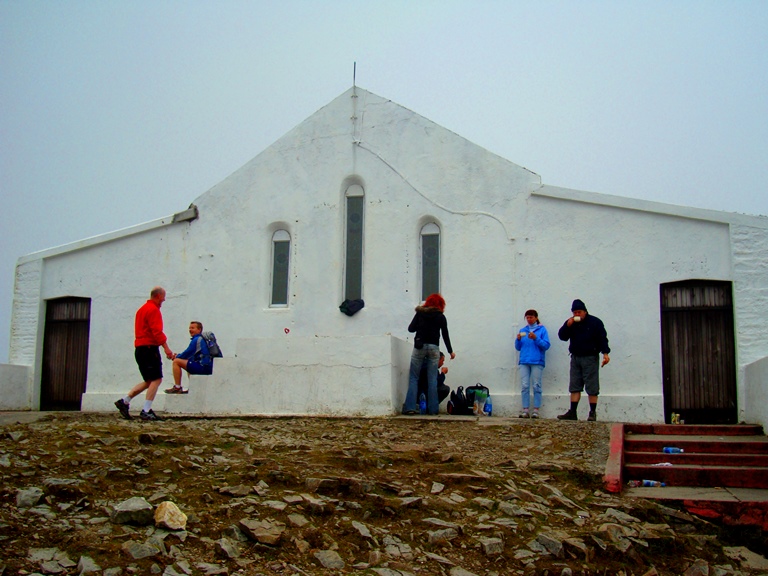
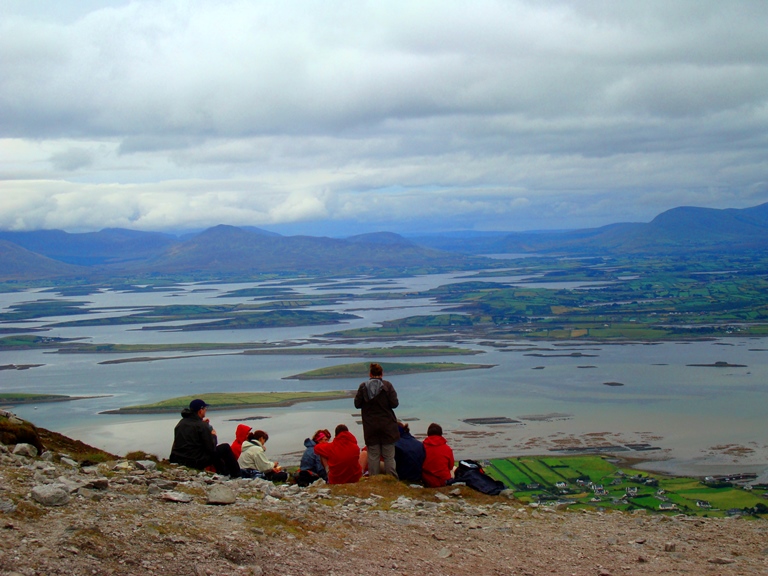
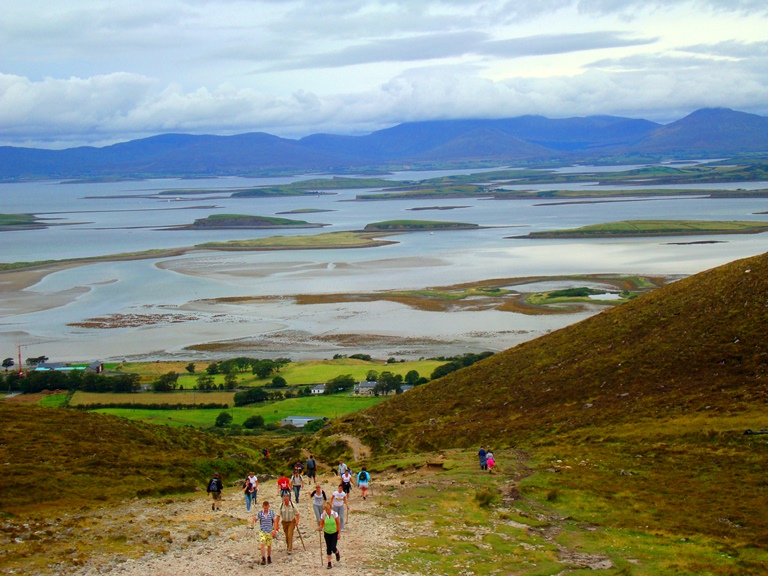
Famed for being the spot where St. Patrick banished all the snakes from Ireland and fasted for 40 days and nights. A little church still stands on the top today. Croagh Patrick is a challenging and rewarding climb. It holds stunning views in all directions. Many Pilgrims from all over Ireland and the world come to climb each year and stand in awe of Clew bay and the surrounding Irish coast line.
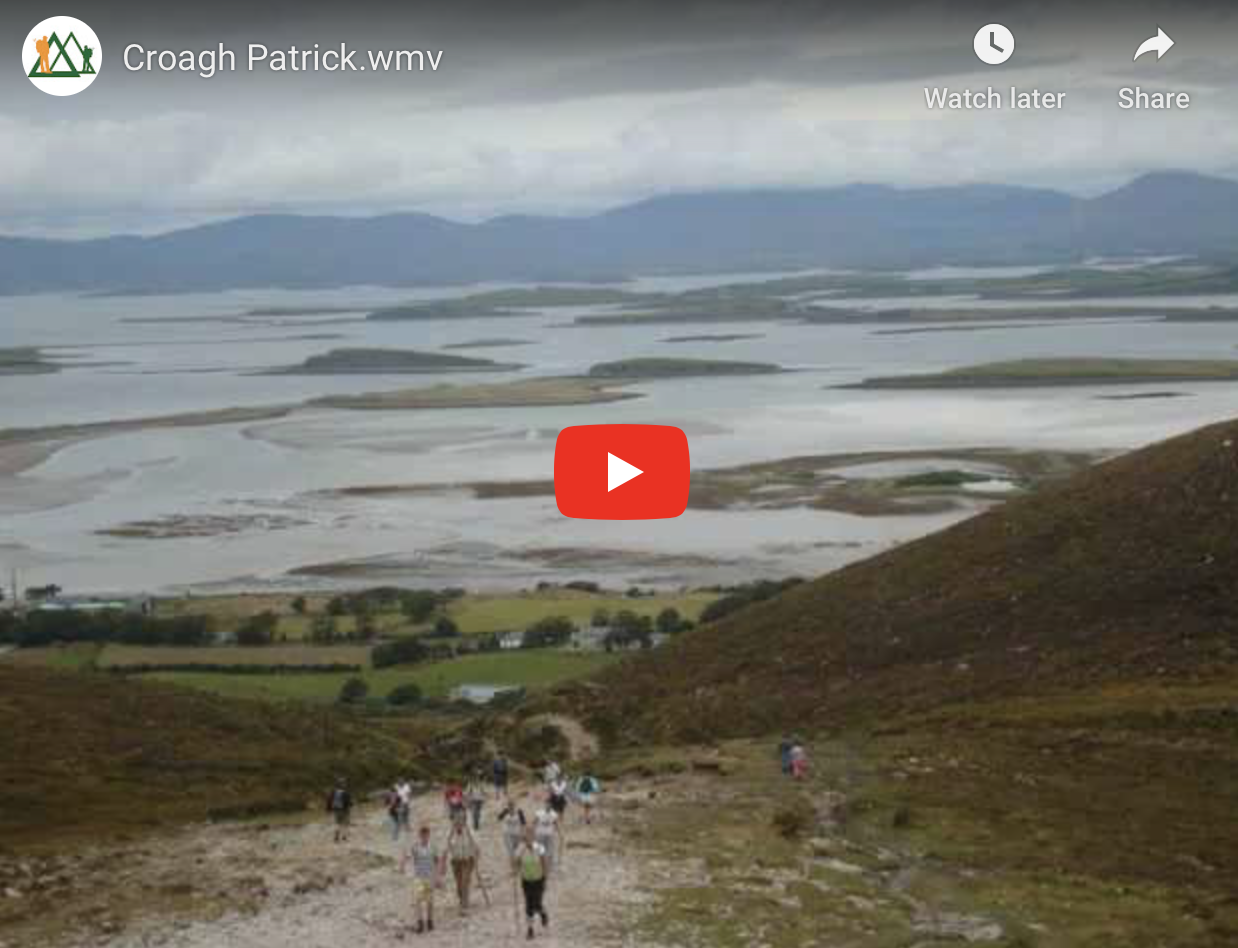
Croagh Patrick rises high from sea level to 2,507 ft.
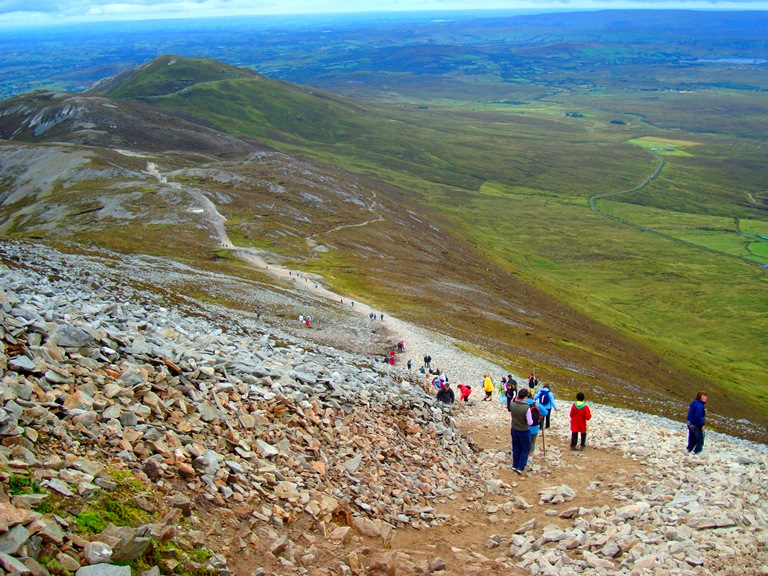
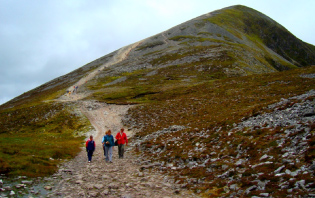
Terrain is mixed rock and dirt, slippy, steep and rocky. You need proper hiking boots, equipment and take your time on this long beautiful walk up Ireland’s holy mountain.
1. Get Your Body Ready Beforehand
You definitely don’t need to be super fit, but doing some prep work will make your climb so much more enjoyable. Croagh Patrick is a long uphill walk with a pretty steep, rocky section near the top.
If you can, try to do some regular hikes that last a couple of hours, or spend time on stairs or an incline treadmill. Throw in some leg exercises like lunges or squats too. Having stronger legs helps you power up the mountain, and honestly, they’ll be even more important on the way back down.
2. Get the Right Boots
Your footwear really matters here. The top part of the mountain is covered in loose stones and uneven ground, and it gets slippery when it’s wet (which happens pretty often).
You’ll want hiking boots that you’ve already worn in, with good grip and ankle support. Make sure you’ve got decent hiking socks too. We’d really suggest skipping the trainers for this one. They just don’t give you the stability you need on this terrain.
3. Pack for Weather That Changes Its Mind
Irish weather does its own thing. You might start in sunshine and end up in cloud and wind an hour later.
Bring a waterproof jacket, something warm to layer underneath, and a hat and gloves just in case. If it’s a bright day, sun protection is smart too. When you can add or remove layers easily, you’ll stay comfortable no matter what the weather throws at you.
4. Don’t Rush It
The beginning of the climb feels pretty easy, but it gets steeper and tougher as you go higher. Start at a comfortable pace, take your time, and stop for breaks whenever you need them.
There’s no prize for finishing first. A steady, relaxed pace means you’ll actually have energy left to enjoy the views and the whole experience.
5. Be Extra Careful Coming Back Down
This is where most people have trouble. The loose stones near the top can slide under your feet, and by this point your legs are usually pretty tired.
Take it slow on the descent, use shorter steps, and if you have trekking poles, this is the perfect time to use them. Your knees will thank you later.
1. Build Your Base Fitness
Start by working on your general endurance. Try to get out 3 or 4 times a week for brisk walks, hikes, cycling or even time on the treadmill.
The goal is to feel comfortable exercising for an hour to 90 minutes without being completely wiped out. The better your baseline fitness, the more you’ll actually enjoy the climb instead of just surviving it.
2. Train on Hills (or Fake Them)
Croagh Patrick is a lot of uphill walking, especially as you get closer to the top. If you’ve got hills nearby, use them. If not, a stair machine or treadmill on an incline works really well too.
Focus on keeping a steady pace rather than racing up. Consistent, controlled uphill training is way more useful than pushing yourself too hard in short bursts.
3. Train for the Downhill
Most people think the climb up is the hardest part, but tired legs on the descent can be just as tough, if not tougher.
Try adding in some step-ups, lunges, squats and calf raises. Even just two short strength sessions a week will make a noticeable difference in how stable and confident you feel on uneven ground.
4. Practice Walking on Uneven Terrain
The upper part of Croagh Patrick is loose and rocky. If you can, do some of your training on trails instead of flat pavement. This helps you develop better balance and strengthens the smaller muscles in your ankles and hips.
The more used to uneven ground you are, the less stressed you’ll feel when you’re higher up the mountain.
5. Do a Long Practice Hike Beforehand
A few weeks before you climb Croagh Patrick, try to do a 2 to 3 hour hike. Wear your hiking boots and bring a light daypack with you.
This gives you a realistic idea of how your body holds up after walking for a while, and it’ll show you if there are any issues with your gear before the actual day.
We treat Croagh Patrick with the same care we bring to all our treks. It’s not the highest mountain in Ireland, but it’s steep, exposed in spots, and those loose slopes near the top need your full attention. Throw in the unpredictable Atlantic weather, and you’ve got a climb that’s worth taking seriously.
When you climb with us, you can focus on enjoying yourself while we handle the route, pacing and safety. We keep things steady and manageable, making sure everyone feels comfortable from the moment we start walking to when we’re back at the bottom.
If you’d like some experienced support for your Croagh Patrick climb, we’d love to help you plan it out and make it a really memorable day on the mountain.
1. How difficult is Croagh Patrick?
Croagh Patrick is a short climb, but it’s definitely demanding. Most people with decent fitness can do it, but the constant uphill and those loose, rocky slopes near the top catch a lot of first-timers off guard. With some preparation and a sensible pace, it’s a really rewarding challenge.
2. How long does the climb take?
Most people take between 4 and 6 hours for the round trip, depending on how fit you are, what the weather’s doing, and how busy the trail is. We always keep a comfortable, controlled pace with plenty of time for breaks and to take in the views from the top.
3. What should I wear?
Being prepared makes a huge difference. We recommend bringing:
The weather can shift pretty quickly, and it’s usually quite a bit cooler and windier once you get higher up.
4. Do I need a guide?
Plenty of people climb on their own, but having experienced guides gives you more structure, confidence and an extra safety net. We handle the pacing, keep an eye on the weather, and help out on the steeper, trickier sections. It means you can focus on enjoying the day instead of worrying about the route.
5. When is the best time to climb?
Late spring through early autumn usually gives you the best conditions. That said, Irish weather has a mind of its own no matter what time of year it is. Being flexible, prepared, and keeping your expectations realistic are really the keys to having a great climb.
Country:
Ireland
Duration:
0 Days
Distance:
0,0 km
Max. Altitude:
765 m / 2,507 ft
Difficulty:
Medium
Group Size:
12

Does this information excite you to take and Climb Croagh Patrick? If so, get in touch today.