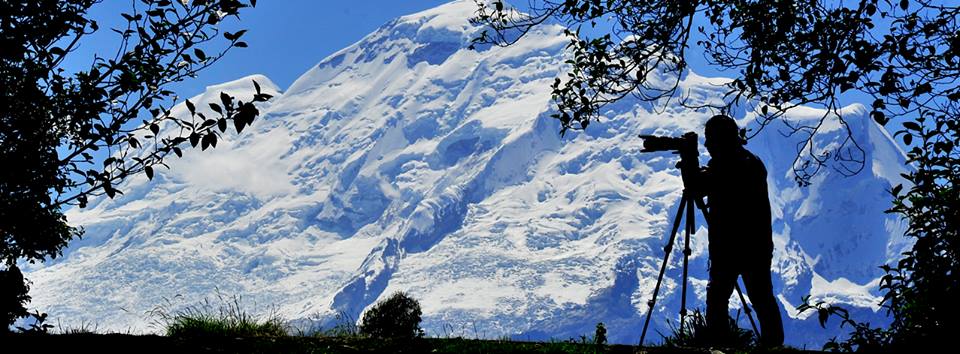
Alpamayo is one of the world’s most beautiful peaks
Rising to 19,511 feet (5,947m) in Peru’s spectacular Cordillera Blanca, Alpamayo is considered one of the most beautiful mountains in the world. Its iconic ice-covered pyramid and steep, technical climbing make it an unforgettable objective for experienced mountaineers over twenty days.
We have been running trips to Alpamayo for fifteen year and our Alpamayo expedition includes an acclimatization climb of Nevado Ishinca is a 18,143 feet (5,530m). Our itinerary is designed to optimize safety and allows you to adapt to the altitude and prepare for the challenge ahead.
If you have climbed Cotopaxi and Chimborazo, Island peak, Lobuche Peak or similar high-altitude mountains and are ready to take your mountaineering to the next level. Climbing Alpamayo offers an incredible combination of technical challenge, spectacular scenery and genuine adventure in the Peruvian Andes.
Alpamayo sits in Peru’s spectacular Cordillera Blanca, its distinctive pyramid shape and steep ice-covered face make it a dream objective for mountaineers looking for a challenging expedition in the Andes.
Our Alpamayo expedition is designed for climbers with previous mountaineering experience who want to progress to more technical climbing at high altitude. Alpamayo offers an exciting next step, combining glacier travel with steep snow and ice climbing in a truly spectacular mountain environment.
Good acclimatization is essential when climbing Alpamayo. Before attempting our main objective, we climb Nevado Ishinca is a 18,143 feet (5,530m) providing valuable acclimatization while allowing the team to prepare for the more technical climbing ahead. Taking the time to acclimatize properly gives you the best opportunity to arrive at Alpamayo strong and ready for the challenge.
The Cordillera Blanca of Peru is one of the world’s great mountaineering destinations, with dramatic glaciers, turquoise lakes and some of the highest tropical mountains on Earth. For experienced climbers searching for their next major adventure, climbing Alpamayo in Peru delivers everything you could want: technical climbing, high altitude, incredible scenery and the opportunity to climb one of the most striking mountains in the Andes.
Upon arrival into Huaraz airport our team will pick you up and transfer you by private transfer to the city of Huaraz, located in the heart of the Andes. You will check in at the hotel and free time to rest, take a gentle walk around the city, and begin adapting to the altitude. You will need to stay hydrated and covered up from the sun.
After breakfast at the hotel our IFMGA guide with do a briefing and orientation, and general expedition overview and for the coming days. After the briefing you will go on a acclimatization hike which will be approximately 4 hours and then return to Huaraz and rest.
Early departure from Huaraz toward the Llupa–Pitec sector, the starting point of the hike to Laguna Churup. We will begin the ascent along well-marked trails until we reach a rocky ramp, crossing high-Andean landscapes on our way to the spectacular Laguna Churup. This day is an important part of our preparation for climbing in the Cordillera Blanca, as it allows us to experience higher altitude before beginning the expedition. We will have time to rest, take photographs, and enjoy the scenery before starting the descent. Return to Huaraz in the afternoon. Hiking time: approximately 5–6 hours and overnight in Huaraz
We leave Huaraz by private vehicle toward Cochapampa, where we will meet the porters responsible for carrying our personnel and group gear. We will then begin the hike, enjoying panoramic views to the north, with the Copa and Huascarán snow peaks as the highlights.
We will continue deeper into the Ishinca Valley, trekking through pristine nature and crossing extensive areas of Andean vegetation and trees. We will pass through the Huascarán National Park checkpoint and continue toward the Ishinca Valley. Today is approximately 4-5 hours of hiking.
Today is a rest and acclimatization day. We will take a short walk around the camp and do some light training up to Laguna Tocllacocha, if conditions allow. Inspection of mountaineering gear and technical equipment. Preparation for the ascent.
A not-too-early departure from base camp, as access is relatively easy. Ascent to the moraine camp of Nevado Ishinca. Setting up the high camp. Preparation of technical equipment for the summit. It is important to sleep at a higher altitude before summit day.
Early departure, at approximately 4:00am from the moraine camp located at 5,000m. From this point we will ascend along the right-hand side of Laguna Ishinca, negotiating rocky sections and switchbacks until we reach the approach zone. We will enter the glacier, passing beneath Nevado Ranrapalca, and continue along easy snow slopes, avoiding the crevasses, until we reach a broad slope. We will then do a short climb to reach the main summit. Return via the same route. Approximately 10–12 hours, depending on conditions and team.
Depending on the group’s wishes and conditions, we may make the ascent of Urus Este. From base camp we will ascend directly up the slope located beneath the Urus glacier until we reach easily accessible snow slopes. We will then follow the SSE ridge without major difficulties, until we pass two straightforward rock steps located just below the summit. The ascent from base camp takes between 7 and 9 hours, depending on conditions.
Descent from base camp. Hike to Pashpa/Cochapampa. Transfer to Huaraz. Hotel and rest. Gear inspection and preparation for the Alpamayo expedition.
After breakfast at the hotel, we will head north from Huaraz in a private minibus. Along the way we will pass through the picturesque towns of Carhuaz and Mancos. From this area we can admire Huascarán. We will then reach the province of Caraz, situated at 2,290m. From there we will take the turnoff toward the village of Cashapampa, where the trek begins that will take us into the narrow Santa Cruz Valley. The first sections of the route are along the right-hand side of the river. From this point, the trail begins to climb via small switchbacks. The heat can be intense, so wearing a hat or cap is recommended. As we advance, the valley becomes narrower. After approximately 5 hours of hiking, we will reach the Llamacorral camp.
We will begin our second day of trekking, enjoying views of Nevado Caraz (6,020 m). We will continue toward the Ichiccocha lagoons, which are currently affected by an avalanche and of which practically nothing remains, and afterward toward Jatuncocha, which offers a beautiful landscape characterized by its turquoise-blue waters. From here we can observe the Rinrihirca and Pucahircas snow peaks. We will then reach Jatunquishwar and take the turnoff toward the Arhuaycocha Valley. We will continue climbing along a switchback trail until we reach a point from where we can appreciate the stunning views of Alpamayo, Quitaraju, and the other mountains surrounding this valley. Approximate duration: 5–6 hours.
A day of rest and acclimatization. A short reconnaissance hike, if conditions allow. Inspection of technical equipment: crampons, ice axe, rope, harness, and protective gear. Preparation for the ascent of Alpamayo.
After breakfast we will prepare our mountaineering gear. Gradually, and after lunch, we will set off toward the moraine camp. The trail, very well marked, begins directly from base camp and climbs almost straight up. In some sections we will do switchbacks and cross areas of exposed rock, moving with caution, as the mountain’s glaciation changes rapidly. Upon reaching the moraine camp, we will camp in an area with small platforms, which is less comfortable than base camp. Duration: approximately 3–4 hours. In the afternoon we can enjoy an extraordinary panoramic view and, if conditions allow a spectacular sunset. The temperature can vary considerably, at times shifting from very warm conditions to intense cold during the afternoon.
At the moraine camp we will equip ourselves with harness, helmet, and the rest of the technical gear to begin the ascent. The moraine is somewhat unstable, though not overly long. We will then begin climbing over snow until we reach the glacier. This section has numerous crevasses and is highly exposed. Conditions can vary considerably depending on the weather each year. During the morning it can be quite hot until reaching the couloir. In this part we will use two or three rope pitches, with slopes of approximately 50° to 60°. At times, Camp 1 is located very close to the Alpamayo col camp. Over the past two years, the camp has been set at approximately 5,300 m. From the col camp we will descend until we are very close to the face of Alpamayo, one of the most beautiful mountains in the world. From this point we can enjoy panoramic views of several mountains in the Cordillera Blanca. Approximate duration: 5–6 hours. Once back at high camp, the weather, mountain conditions, and the clients’ physical state will be assessed before continuing toward the summit.
After having coffee and some cereal, we will equip ourselves with all the technical gear needed to climb the Direct French Route. We will begin the ascent toward the summit of Alpamayo. We will approach the bergschrund and, once this section is overcome, we will enter the face. The first pitches will be approximately 60 meters long, with an incline of around 60° to 70°. The final part reaches approximately 80°. After overcoming this section, we will successfully reach the summit of one of the most beautiful mountains in the world. The descent to Camp 1 will be made by rappelling, using the lines previously set during the ascent. Approximate duration: 14–15 hours, depending on conditions and the team.
A day reserved for a second summit attempt in case the weather, glacier, or route conditions did not allow the objective to be completed the previous day. If the summit has already been reached, we will use the day for rest or descent, depending on conditions. This day functions mainly as a contingency day for mountain conditions.
Descent from high camp. Return to base camp. Rest and recovery after the climbing days.
A reserve day for adverse weather conditions. In the event of good weather and having completed the planned activity, it may be used for rest, recovery, or to begin the descent early. The decision will depend on the actual mountain conditions.
Descent through the valley toward Cashapampa. Transfer by road to Huaraz. Arrival at the hotel. Shower, rest, and recovery.
Transfer from Huaraz to Anta Airport for your flight back to Lima and onward journey.
1. Understand the Technical Nature
Alpamayo is a technical alpine climb, not just a high-altitude trek. The summit pyramid involves sustained 60–70° snow and ice climbing, often on fixed lines. You’ll want to feel comfortable front-pointing for extended periods and handling rope systems confidently. The more at ease you are on steep terrain, the less energy you’ll spend managing stress when it counts.
2. Arrive Strong, Not Just Fit
General fitness will only take you so far. What you really need is strength endurance, the ability to keep moving uphill steadily for hours in boots and with a pack on your back. Build your training around sustained uphill efforts and long continuous climbs rather than short, intense bursts.
3. Take Acclimatization Seriously
Alpamayo sits at nearly 6,000m, and even though it’s lower than Huascarán, acclimatization still plays a big role in how you perform and how safe you stay. A structured plan that includes climbs on nearby peaks will make a real difference come summit day.
4. Prepare for the Exposure
The summit pyramid is steep and visually intense. It’s not uncommon to feel a little overwhelmed when you look up. Breaking the climb into smaller sections, focusing on your breathing, and keeping a steady rhythm will help you stay calm and move with control.
5. Get Your Gear Right
Technical boots, sharp crampons, a well-fitted harness, and reliable cold weather layers are all non-negotiable. Gear that doesn’t fit well or isn’t up to the task can make an already demanding climb feel significantly harder. Test and wear everything before the expedition so there are no surprises on the mountain.
1. Train For Endurance
Aim for 4 to 5 endurance sessions per week, whether that’s long hikes, uphill treadmill walking, stair climbing, or trail running. Focus on sustained efforts of 60 to 90 minutes at a steady, moderate pace. As your fitness builds, introduce a weighted pack to better simulate what the expedition will demand. A strong aerobic base helps you recover faster between rotations and perform better at altitude.
2. Train For Strength
Twice a week, bring in some leg focused strength work. Step-ups, walking lunges, squats, Romanian deadlifts, and core exercises are all great options. Keep the weight moderate and the repetitions higher, the goal is muscular strength, not maximum power. This kind of training prepares your body well for sustained climbing on steep snow.
3. Train for Steep Terrain
If you can, get time on steep snow or ice before the expedition. Indoor dry-tooling walls or ice climbing sessions are both excellent ways to prepare. Practice in your mountaineering boots too, so your body gets used to the real conditions. The more specific your preparation, the more confident you’ll feel when it matters.
4. Practice Back-to-Back Training
Mountaineering asks a lot of you over multiple consecutive days, so your training should reflect that. Schedule long hikes or uphill sessions on back-to-back days to get a feel for expedition fatigue. Learning to move well on tired legs is one of the most valuable things you can do for summit day.
5. Work on Core Stability and Balance
A strong core makes a real difference when you’re climbing steep terrain or moving roped up. Add planks, rotational exercises, and single-leg balance work into your routine. Better stability means less wasted energy and more control on exposed ground.
6. Start Early and Stay Consistent
Give yourself 3 to 5 months of structured preparation. Build your training load gradually and avoid jumping up in intensity too quickly. Consistency is what builds the durability Alpamayo requires, not extreme sessions. Arriving healthy, strong, and confident will serve you far better than pushing too hard in the final weeks.
Safety and acclimatization are at the core of everything we do on Alpamayo. At 5,947m, the steep and technical summit pyramid calls for a disciplined, well-paced approach. We build proper acclimatization time into every expedition and follow a measured ascent plan because, in our experience, that’s what makes the biggest difference to both safety and summit success.
Our lead guides are internationally certified, wilderness first responder trained, and highly experienced in the Cordillera Blanca. They know this mountain well, its terrain, its conditions, and the judgment it takes to climb it safely.
The itinerary we’ve refined over years of expeditions is designed to give you the best possible chance of reaching the summit, with smart pacing and a clear plan from start to finish.
Q) What is the best time to climb Alpamayo?
The best months to climb Alpamayo are June, July, and August. This falls within Peru’s dry season, when conditions in the Cordillera Blanca tend to be more settled and predictable.
Q) How difficult is Alpamayo?
Alpamayo is one of the most technical classic climbs in the Andes. The final summit pyramid involves steep snow and ice, so you’ll need solid technical climbing skills to get there safely.
Q) Do I need previous mountaineering experience?
Yes, prior experience is important. You should be comfortable with crampons, ice axe, and fixed lines before attempting this climb. We’d also recommend having completed other technical alpine peaks beforehand.
Q) How high is Alpamayo?
Alpamayo sits at 5,947m (19,511 ft) in Peru’s Cordillera Blanca.
Q) How long is the expedition?
Most expeditions run between 10 and 14 days. This gives enough time for proper acclimatization and some flexibility if the weather doesn’t cooperate.
Q) What are the main challenges?
The steep terrain, altitude, and unpredictable alpine conditions are what most climbers find most demanding. Coming well prepared and having an experienced guiding team alongside you makes a real difference.
Country:
Peru
Duration:
20 Days
Distance:
65 km
Max. Altitude:
5,947m / 19,511 ft
Difficulty:
Technical
Group Size:
6

Does this information excite you to take the next step towards achieving your goals in the mountains? If so, get in touch today.